
§ Care guide · Euphorbia pulcherrima · Checked Oct 2026
How to care for a poinsettia
Give a poinsettia at least 6 hours of bright, indirect light a day, water when the soil surface feels dry, and keep it at 65 to 70°F away from drafts and anything below 50°F. To color it again next year, it needs 14 hours of uninterrupted darkness every night starting in early October.
Get a permanent discount if you join Early Access. iPhone and Android, in the contiguous U.S.

§ 010 · Care
Poinsettia care, step by step
Light
Set the plant in a south, east, or west window where it gets bright daylight. Clemson Extension calls for at least 6 hours of bright, indirect sun a day.
Water
Water when the soil surface feels dry to the touch. Let water drain into the saucer and pour out the excess, because roots kept too wet rot. Do not let the plant wilt, since wilted plants drop their bracts sooner.
Temperature
Keep it at 65 to 70°F. Temperatures above 75°F age the plant faster, and temperatures below 50°F cause chilling injury and early leaf drop. Freezing kills it. Keep the plant sleeved or covered on the trip home when it is below 50°F outside.
Potting
If you keep the plant after the holidays, move it in early June to a container 2 to 4 inches bigger than its original pot.
Fertilizer
Do not fertilize while it is in bloom. Once new growth appears, feed with an all-purpose houseplant fertilizer at half strength every 3 to 4 weeks. Clemson Extension feeds every two to three weeks in spring, summer, and fall with a balanced fertilizer such as 10-10-10.
Getting it to turn red again
Poinsettias color up in response to long nights. Starting the first week of October, keep the plant in total darkness for 14 continuous hours each night for 8 to 10 weeks, and give it six to eight hours of bright sun each day. To give it darkness, put it in a closet or cover it with a box, then return it to the sunny window by day. Illinois Extension keeps plants dark from 5 pm to 8 am until the bracts color in early or mid-December, and night temperatures above 70 to 75°F can delay or stop flowering.
After the holidays
When about half the leaves and bracts have dropped, cut back on water until the soil is completely dry. Store the dormant plant in a cool, dark place and water only enough to keep the stems from shriveling. In spring, prune it back: Clemson Extension cuts to about 8 inches in March or April, and Illinois Extension cuts to 4 to 6 inches in early May. Move it outdoors once nights stay above 50°F, and bring it back inside when temperatures fall to 55 to 60°F.
Common problems
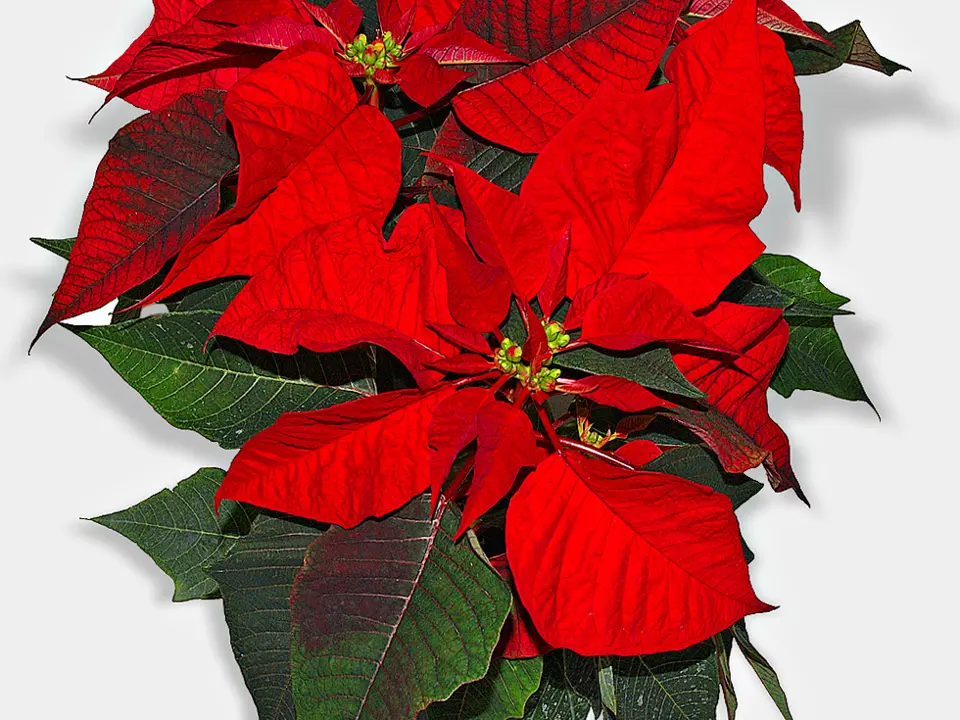
Leaf drop comes from cold below 50°F, drafts from doors or heating vents, cold windows, and wilting. Overwatering rots the roots. When you buy one, check the small true flowers in the center of the bracts: green or red-tipped flowers hold longer than ones covered in yellow pollen.
Pet safety
The ASPCA lists poinsettia as toxic to dogs, cats, and horses, and also says its toxicity is generally over-rated. The sap irritates the mouth and stomach and sometimes causes vomiting. University of Minnesota and Wisconsin Extension say poinsettias are not poisonous but should not be eaten, and the sap can cause a skin rash.
§ 020 · Questions
Questions about poinsettias
How do I get my poinsettia to turn red again?
Starting the first week of October, give it 14 hours of total darkness every night for 8 to 10 weeks, plus six to eight hours of bright sun each day. Keep nights below 70°F, because warmer nights can delay or stop the color.
Why is my poinsettia dropping leaves?
Cold below 50°F, drafts from doors and heating vents, cold windows, and wilting all cause leaf drop. Keep it at 65 to 70°F and water when the soil surface feels dry.
How long does a poinsettia last?
With good care, a poinsettia lasts 6 to 8 weeks in your home.
Can I put my poinsettia outside?
Yes, in summer. Move it outdoors once nights stay above 50°F, give it part sun, and bring it back inside when temperatures drop to 55 to 60°F.
Are poinsettias poisonous to cats and dogs?
The ASPCA lists poinsettia as toxic to dogs and cats but calls its toxicity generally over-rated. The sap irritates the mouth and stomach and sometimes causes vomiting.